
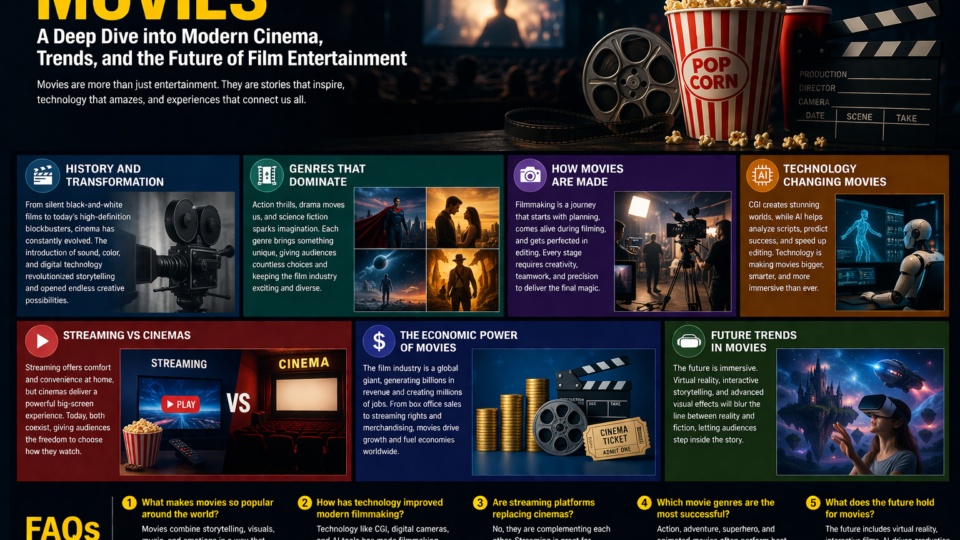
Movies: A Deep Dive into Modern Cinema, Trends, and the Future of Film Entertainment
Movies have become one of the most powerful forms of storytelling in human history. They are not just moving pictures on a screen; they are emotional journeys, cultural reflections, and creative expressions that connect billions of people worldwide. Every day, millions of viewers watch films to laugh, cry, learn, and escape from their routine lives.
The global film industry has grown into a multi-billion-dollar ecosystem that influences fashion, language, technology, and even social behavior. Movies shape how people think and feel about the world around them. Whether it is a heartfelt drama or a high-energy action film, cinema plays a role in shaping collective imagination.
Why Movies Are More Than Entertainment
Movies are often seen as entertainment, but their impact goes far beyond that. They educate, inspire, and sometimes even challenge societal norms. A powerful film can change opinions or spark global conversations. For example, documentaries often reveal hidden truths, while fictional stories can reflect real-world struggles in a symbolic way.
History and Transformation of Cinema
Cinema has come a long way from simple black-and-white silent films to today’s advanced digital blockbusters. This transformation reflects not only technological progress but also changes in audience expectations and storytelling styles.
From Early Silent Films to Talkies
In the early days of cinema, films had no synchronized sound. Actors relied on exaggerated expressions and gestures to tell stories. Music was often played live in theaters to enhance the emotional experience.
Birth of Narrative Storytelling in Film
As filmmaking evolved, creators began experimenting with structured storytelling. Instead of short clips or simple scenes, movies started following narratives with beginnings, conflicts, and resolutions. This shift laid the foundation for modern cinema as we know it today.
Digital Revolution in Cinema
The introduction of digital cameras and editing tools changed everything. Filmmakers could now shoot more efficiently, edit faster, and experiment with visual effects that were previously impossible. This revolution made filmmaking more accessible and creative.
Genres That Dominate the Movie Industry
Different audiences prefer different types of films, and genres help categorize storytelling styles. Some genres consistently perform better in global markets due to their universal appeal.
Action and Adventure Films
Action movies are among the most popular worldwide. They are fast-paced, visually exciting, and often feature heroic characters overcoming impossible challenges. These films rely heavily on stunts, special effects, and intense storytelling.
Drama and Emotional Storytelling
Drama films focus on human emotions, relationships, and real-life struggles. They often leave a lasting impact on viewers because they feel relatable and authentic. These movies rely more on strong scripts and performances than visual effects.
Science Fiction and Fantasy Growth
Science fiction and fantasy films transport audiences to imaginary worlds. With the help of CGI and advanced technology, filmmakers can create futuristic cities, alien planets, and magical realms that captivate viewers’ imagination.
How Movies Are Made Today
Modern filmmaking is a complex process involving multiple stages and teams working together to bring a story to life.
Pre-Production Planning
This stage involves writing scripts, creating storyboards, budgeting, and selecting cast members. It is one of the most important phases because it lays the foundation for the entire project.
Filming and Production Techniques
During production, directors and crews work on set to capture scenes. Lighting, camera angles, and sound recording all play a crucial role in ensuring high-quality footage.
Post-Production and Editing
After filming, editors piece together the footage, add visual effects, and adjust sound design. This stage transforms raw footage into a polished final product ready for audiences.
The Role of Technology in Modern Movies
Technology has become the backbone of the film industry. Without it, many of today’s cinematic experiences would not be possible.
CGI and Visual Effects Impact
Computer-generated imagery (CGI) allows filmmakers to create realistic environments and characters that do not exist in real life. This technology is widely used in superhero films, fantasy epics, and animated features.
AI and Automation in Filmmaking
Artificial intelligence is increasingly being used to analyze scripts, predict audience reactions, and even assist in editing. AI tools help studios reduce costs and improve efficiency in production workflows.
Movie Consumption in the Digital Age
The way people watch movies has changed dramatically over the last decade. Traditional cinema is no longer the only option.
Streaming Platforms vs Cinemas
Streaming platforms offer convenience, allowing viewers to watch movies anytime and anywhere. However, cinemas still provide a unique experience with large screens, surround sound, and shared audience reactions. Both formats now coexist, serving different viewing preferences.
Economic Power of the Film Industry
The film industry is a major contributor to the global economy, generating billions of dollars annually and creating millions of jobs worldwide.
Revenue Streams in Movies
Movies earn revenue through multiple channels:
- Box office sales
- Streaming rights
- Merchandising
- Licensing deals
- International distribution
Each of these streams contributes significantly to a film’s overall success.
Future Trends in Movies
The future of cinema is evolving rapidly with new technologies and storytelling methods reshaping how audiences experience films.
Interactive and Immersive Cinema
Future films may allow viewers to interact with the story itself. Virtual reality and augmented reality are expected to create immersive environments where audiences feel like part of the movie rather than just observers.
Conclusion
Movies continue to be one of the most influential forms of entertainment in the modern world. They combine art, technology, and storytelling to create powerful emotional experiences. As technology continues to evolve, cinema will become even more immersive, interactive, and globally connected. Despite all changes in how we consume content, the magic of movies remains timeless and universal.
FAQs
1. What makes movies so popular worldwide?
Movies are popular because they combine storytelling, emotion, visuals, and sound into a powerful experience that appeals to all age groups.
2. How has technology changed modern filmmaking?
Technology has introduced CGI, digital cameras, and AI tools that make filmmaking faster, cheaper, and more visually impressive.
3. Why are streaming platforms growing so fast?
Streaming platforms offer convenience, affordability, and a wide range of content accessible from anywhere.
4. Do cinemas still have value today?
Yes, cinemas provide a unique immersive experience that cannot be fully replicated at home.
5. What is the future of movies?
The future of movies includes interactive storytelling, virtual reality experiences, and AI-driven production techniques.







Leave a Reply