
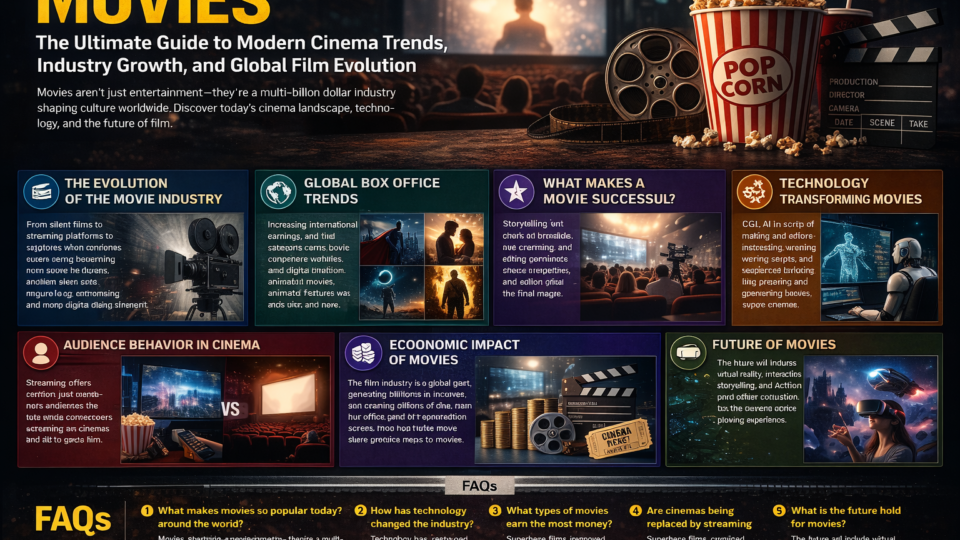
Movies: The Ultimate Guide to Modern Cinema Trends, Industry Growth, and Global Film Evolution
Movies have become more than just entertainment—they are a global cultural force shaping opinions, lifestyles, and even economies. Every year, billions of people around the world watch films in cinemas, on streaming platforms, or through mobile devices. The movie industry continues to grow rapidly, driven by technological innovation and changing audience habits.
In recent times, global cinema has shown strong recovery and expansion. According to industry data, worldwide box office revenues have surpassed the $100 billion mark in recent years, reflecting how powerful and profitable the entertainment sector has become. Movies are no longer limited to Hollywood or a single region; they are now a truly global experience.
Why Movies Still Matter Today
Movies matter because they connect people emotionally and culturally. Whether it’s action, romance, comedy, or science fiction, films provide an escape from reality while also reflecting real-world issues. People don’t just watch movies—they experience them. This emotional connection is what keeps cinema alive even in the age of digital content.
The Evolution of the Movie Industry
The movie industry has undergone massive transformation over the last century. From silent black-and-white films to high-definition digital blockbusters, cinema has evolved with technology.
Silent Films to Digital Cinema
The early days of cinema were simple but revolutionary. Silent films relied heavily on expressions, gestures, and music to tell stories. Over time, sound was introduced, changing everything about storytelling.
Early Film Era Innovations
The introduction of synchronized sound, color film, and later computer-generated visuals completely reshaped filmmaking. These innovations allowed filmmakers to explore deeper stories and more visually stunning worlds.
Rise of Streaming Platforms
In recent years, streaming platforms have changed how people consume movies. Instead of going to theaters, viewers can now watch films at home on demand. This shift has forced traditional cinema to adapt by focusing on blockbuster experiences that cannot be replicated on small screens.
Global Box Office Trends in Recent Years
The global movie industry continues to grow, with international markets playing a major role in revenue generation. Recent blockbuster films have earned hundreds of millions globally, showing strong audience demand.
For example, major 2026 releases like large-scale animated and sci-fi films have crossed the $600 million+ range worldwide, proving that audiences still value theatrical experiences for big productions.
Increasing International Revenue Impact
International markets, especially Asia and Europe, now contribute a huge share of total box office earnings. In many cases, overseas revenue exceeds domestic earnings, making global distribution essential for success.
Top Performing Film Categories
Some film genres consistently perform better than others:
- Superhero films
- Animated family movies
- Science fiction adventures
- Action-packed franchises
These categories dominate because they appeal to wide audiences across different cultures.
What Makes a Movie Successful?
Success in the movie industry depends on several key factors. It is not just about budget or famous actors; it is about how well a film connects with its audience.
Storytelling and Audience Engagement
A strong storyline is the backbone of every successful movie. Audiences want characters they can relate to and stories that keep them emotionally invested from start to finish.
Marketing and Distribution Power
Even a great movie can fail without proper marketing. Studios spend millions promoting films through trailers, social media campaigns, and global premieres. Distribution strategy also plays a huge role in reaching the right audience at the right time.
Technology Transforming Movies
Technology has completely reshaped how movies are made and experienced. Modern filmmaking relies heavily on advanced tools that enhance both production quality and viewer experience.
CGI and Visual Effects Revolution
Computer-generated imagery (CGI) allows filmmakers to create worlds that were once impossible. From fantasy landscapes to realistic explosions, CGI has made storytelling more visually powerful than ever before.
AI in Modern Film Production
Artificial intelligence is now being used in script analysis, editing, and even audience prediction. Studios can analyze trends and predict which types of movies will perform best at the box office.
Audience Behavior in Cinema Today
Modern audiences have changed significantly in how they consume entertainment. People now prefer flexibility, personalization, and convenience.
Changing Viewing Preferences
While streaming is popular, cinemas still attract audiences for blockbuster releases. People enjoy the immersive experience of large screens, surround sound, and shared emotional reactions with others in the theater.
Economic Impact of Movies
The film industry is not just about entertainment—it is a massive global business supporting millions of jobs.
Film Industry as a Global Business
From production crews to marketing teams, the movie industry supports a wide ecosystem. In recent years, global film revenues have exceeded $100 billion annually, showing its economic strength and influence.
Future of Movies
The future of cinema looks exciting as technology continues to evolve. The industry is moving toward more immersive and interactive experiences.
Virtual Reality and Immersive Cinema
Virtual reality is expected to revolutionize storytelling by placing viewers inside the movie itself. Instead of watching a story, audiences may soon experience it firsthand.
Conclusion
Movies continue to be one of the most powerful forms of entertainment in the world. With evolving technology, global audience expansion, and strong box office performance, the industry is only getting stronger. From traditional theaters to advanced digital experiences, cinema is adapting to meet the demands of modern viewers while maintaining its emotional core.
The future promises even more innovation, making movies an essential part of global culture for years to come.
FAQs
1. Why are movies still popular today?
Movies remain popular because they offer emotional storytelling, visual entertainment, and shared cultural experiences that other media cannot fully replace.
2. How has technology changed the movie industry?
Technology has introduced CGI, AI, and advanced editing tools that allow filmmakers to create more realistic and imaginative stories.
3. What types of movies earn the most money?
Superhero films, animated movies, and action franchises generally earn the highest box office revenue worldwide.
4. Are streaming platforms replacing cinemas?
Streaming platforms are growing, but cinemas still dominate for big-budget blockbuster releases and immersive experiences.
5. What is the future of movies?
The future includes virtual reality, AI-driven production, and more immersive storytelling formats that blend digital and real-world experiences.







Leave a Reply